
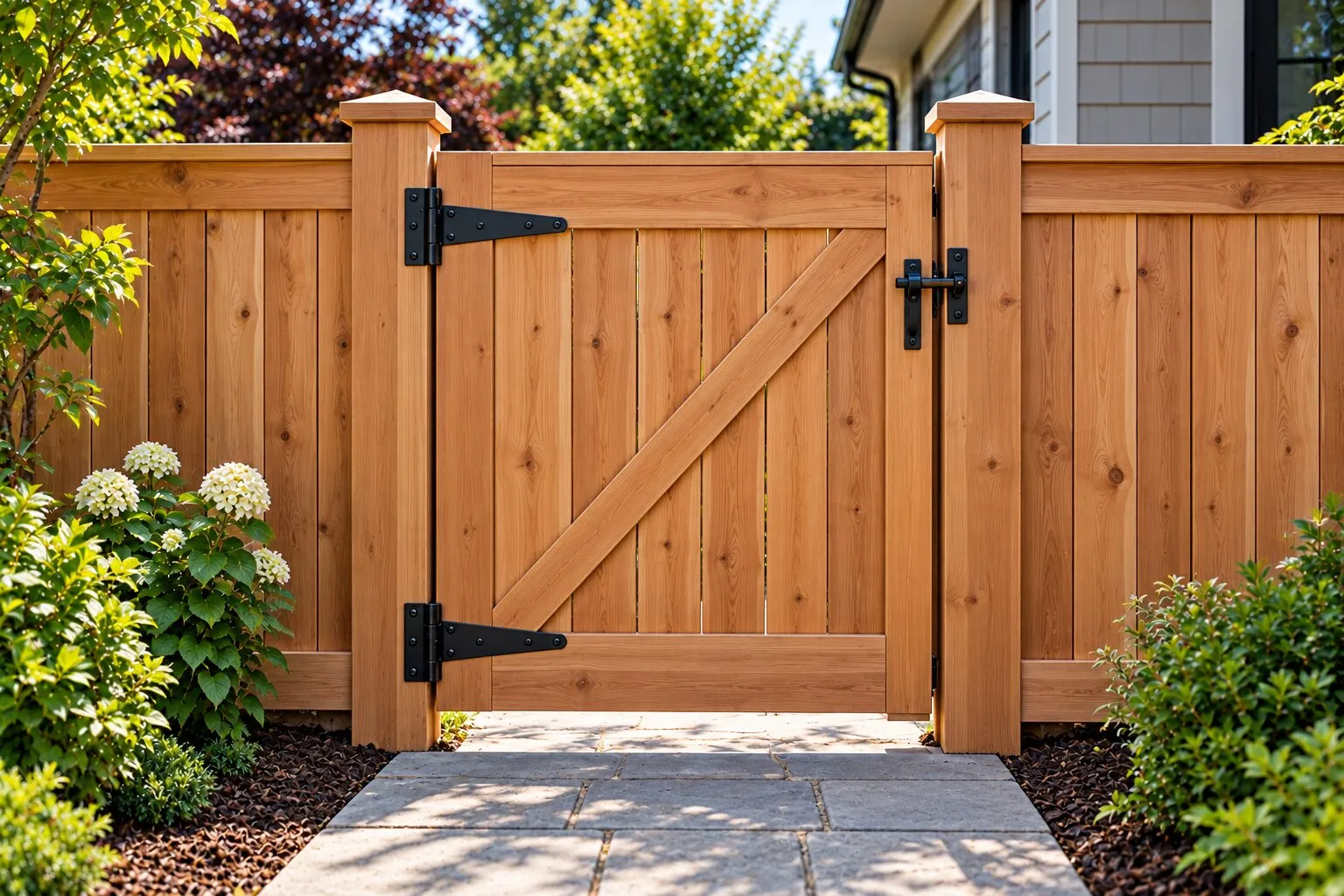

A gate is the only part of a fence that moves, and that makes it the part people notice most. It gets opened for trash day, lawn mowers, deliveries, kids, and dogs, sometimes dozens of times a week. When a gate is planned well, nobody thinks about it. When it isn’t, it drags on the ground, won’t latch, swings into a flower bed, or turns out to be too narrow for the wheelbarrow. Most of those problems come from decisions made before the first post goes in, so a little planning pays off for as long as the fence stands.
Decide What the Gate Needs to Let Through
The first question isn’t style but traffic. Think about the widest and most awkward thing that will ever pass through the opening:
- People only. A walk gate around 3 to 4 feet wide is comfortable for foot traffic and carrying groceries.
- Garden equipment. Ride-on mowers, wheelbarrows, and garden carts often need 5 feet or more. Measure your equipment instead of guessing.
- Bins and deliveries. Wheeled trash and recycling bins, appliance deliveries, and furniture moves all benefit from a little extra width.
- Vehicles, trailers, or boats. These call for a wide single gate or a double gate, often 10 to 12 feet or more, along with heavier posts and hardware.
A common regret is building a narrow gate to save money and then discovering that a landscaping crew or a new hot tub can’t get into the backyard. Where in doubt, go wider, or add a second gate on another side of the property.
Single Gate or Double Gate
A single gate is simpler, cheaper, and easier to latch. Once an opening gets wide, though, a single gate becomes heavy and puts a lot of leverage on its hinge post. Double gates split the opening into two lighter leaves, each hung on its own post. One leaf stays fixed with a drop rod into the ground most of the time, and the other opens for daily use. When something large needs to come through, both open.
For very wide openings, rolling or sliding gates are another option, especially where there isn’t room for a gate to swing.
Plan the Swing Before You Build
Every swinging gate needs clear space to open. Before deciding which way it swings, check:
- Slope. If the ground rises in the direction of the swing, the gate will hit the grade. Gates usually swing toward the downhill side, or the area needs leveling.
- Obstacles. Steps, planters, trees, downspouts, and air conditioning units can block a full swing.
- Traffic flow. Gates generally open into the yard rather than out toward a sidewalk or driveway.
- Pool rules. Gates in pool enclosures typically need to swing outward, away from the pool, and to close and latch on their own. Local codes set the details, so check them before building.
Marking the swing arc on the ground with string or spray paint before construction is a quick way to spot conflicts.
Gate Posts Do the Heavy Lifting
A fence post holds still. A gate post resists a constant pull from the weight of the gate hanging off one side, plus the jolt each time the gate is slammed shut. For that reason, gate posts should be stronger than the line posts around them:
- A larger cross-section, such as a 6×6 wood post instead of a 4×4, or a heavier-gauge steel post
- Deeper footings than standard fence posts
- Solid, well-drained bases so the post doesn’t rot or settle
- For wide gates, steel posts or a steel frame inside a wood-clad post
A gate that sags within a year usually has a gate post that wasn’t built to take the load.
Frame Construction That Resists Sagging
How the gate itself is built matters just as much. Wood gates need a rigid frame with a diagonal brace running from the bottom of the hinge side up to the top of the latch side. That orientation puts the brace in compression, pushing the latch corner up rather than letting it droop. Installing the brace the other way round is a surprisingly common mistake.
Metal-framed gates resist sagging better and can be clad in wood boards to match the fence. They’re often the best choice for wide or heavy gates. Adjustable anti-sag kits, which use a cable and turnbuckle, let you correct small amounts of movement over time.
Hardware Worth Paying For
Hinges and latches are small parts of the budget but large parts of daily use.
- Hinges. Heavy-duty strap or barrel hinges sized for the gate’s weight, in galvanized or stainless steel. Three hinges are often better than two on tall gates.
- Latches. Gravity latches are simple and reliable. Self-closing and self-latching hardware is useful for pet owners and required for many pool gates.
- Locks. Keyed or combination latches, or a padlock hasp, add security for side yards and storage areas.
- Gate stops. A stop keeps the gate from swinging past the latch and straining the hinges.
- Drop rods and cane bolts. These secure the fixed leaf of a double gate.
Corrosion-resistant hardware is especially important in wet climates, where cheap steel rusts quickly and stains the wood around it.
Why Climate and Ground Conditions Matter
Gates are sensitive to ground movement. Even a slight shift of the hinge post shows up as a gate that drags or won’t latch. In regions with wet, heavy soils, posts are under constant pressure from moisture, and wood frames swell and shrink through long rainy seasons. Homeowners in the Pacific Northwest know this well. That’s why crews doing gate installation Seattle area properties tend to focus on deep, well-drained gate posts, metal-reinforced frames, and corrosion-resistant hardware rather than just the look of the gate. Those choices are what keep a gate swinging smoothly through years of wet weather.
Placement and Style
A gate also shapes how a property feels. A few guidelines help:
- Place walk gates where people naturally walk, usually along the shortest path from the driveway or front door to the backyard.
- Keep gates visible from the house if security matters, or tuck them out of sight if privacy is the priority.
- Match the gate to the fence for a seamless look, or make it a deliberate feature with an arched top, a contrasting material, or a pergola overhead.
- Light the gate area so people can find the latch after dark.
A Gate Built for Daily Use
A gate that works well is mostly planning: the right width for real-world traffic, a swing that fits the site, posts and a frame strong enough for the load, and hardware that holds up to the weather. Get those basics right, and the gate becomes the easiest part of the fence to live with rather than the first to fail.