
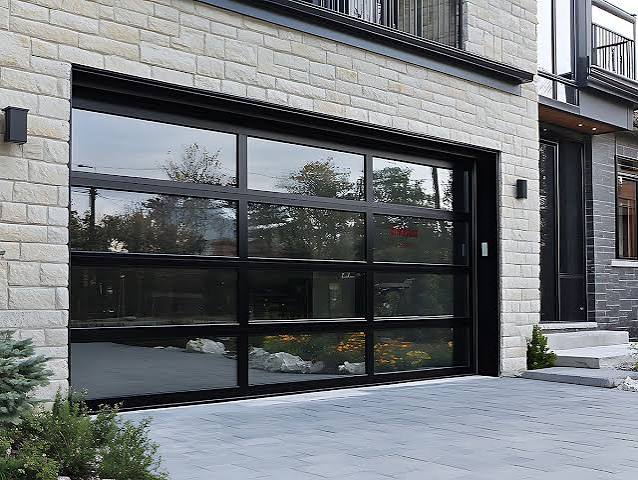

The Design Detail That Changes the Whole Front Elevation
A solid panel garage door — no windows, no glass — reads as a blank rectangle on a home’s front elevation. For homes where the garage is prominently visible from the street (a front-facing garage, particularly on smaller lots where the garage occupies a significant portion of the facade), the garage door’s design significantly affects curb appeal. Windows and glass panels in the garage door are the design element that most directly transforms a blank industrial surface into an architectural feature that complements the home.
Glass options in garage doors range from individual decorative windows set into solid panels to full-panel glass systems where the entire door surface is composed of glass sections — and the options span a wide range of privacy, insulation, and aesthetic character.
Single vs. Double Glass Panels: The Light-Privacy Trade-off
Single-pane glass in garage door windows is the minimum functional option — it admits light but provides no thermal benefit (in fact, it’s a thermal weak point in an otherwise insulated door) and provides limited privacy (clear glass is see-through from the outside). Frosted, textured, or tinted glass addresses the privacy concern while maintaining light admission and is available as an upgrade on most door lines.
Double-pane insulated glass units (IGUs) in garage door windows add meaningful thermal value — the insulated glass maintains the door’s overall insulation performance rather than creating a cold bridge at every window panel. For garages used as conditioned spaces (offices, workshops), double-pane windows are worth the premium. For pure car storage garages, the thermal benefit is less consequential.
Full-View Aluminum Doors: When Glass Is the Door
Full-view aluminum garage doors — doors with aluminum frames and full glass panel sections — are the design statement at the premium end of the garage door market. They provide maximum natural light into the garage space, create a strong contemporary design statement, and in frosted or textured glass options provide privacy while maintaining the light admission benefit.
The considerations beyond aesthetics: full-view aluminum doors with standard glass have significantly lower insulation values than insulated steel or wood doors — they’re essentially large windows. Insulated glass options improve this substantially but don’t match the performance of an insulated solid panel door. For a garage that’s climate-controlled as office or workshop space, this trade-off is significant. For a display garage or a space used primarily for visual access, the thermal trade-off may be acceptable.
Retrofitting Windows to Existing Doors
Adding windows to an existing solid panel garage door — rather than replacing the door — is possible on many panel door systems. Door manufacturers offer window inserts designed to be installed in the existing panel by cutting an opening and installing the glass unit. This approach costs $50–$150 per panel (plus installation) and transforms the door’s appearance without full replacement.
The limitations of retrofitting: the window placement is constrained by the existing panel structure, and not all door models accommodate inserts. The structural integrity of the panel must be maintained — inserts that require too large an opening in a key structural panel weaken the door. Verify with the door manufacturer whether insert windows are available for your specific door model before purchasing materials.
Frosted and Decorative Glass Options
The glass type significantly affects both the visual character and the privacy level of garage door windows. Clear glass provides maximum light but is transparent — anyone at street level can see into the garage. Frosted glass (acid-etched or sandblasted) diffuses light while providing visual privacy. Seeded, rain, or reeded glass patterns provide aesthetic interest and varying degrees of privacy. Tinted glass reduces light transmission and provides privacy while maintaining a clear profile.
Decorative glass with internal patterns (Georgian bar grilles, prairie-style dividers, contemporary grid patterns) creates a window appearance reminiscent of residential windows rather than industrial glazing. These patterns are available as either true divided lights (actual separate glass panes in individual frames) or simulated divided lights (a single pane with a decorative overlay grid). The aesthetic result is similar; the structural and maintenance characteristics differ.