
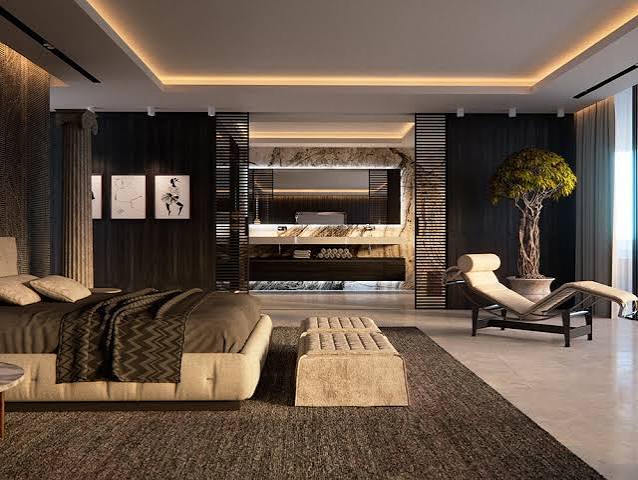

The Room With the Clearest Performance Goal
Every room has a design goal, but the bedroom’s is unique in its specificity and its measurability: sleep quality. Sleep science research over the past two decades has identified specific environmental factors that improve or degrade sleep onset, sleep depth, and sleep duration. This research provides a clear design brief for the bedroom that most residential interior design doesn’t explicitly address.
The bedroom designed for sleep performance may look different from the bedroom optimized primarily for aesthetics, photography, or daytime use — and in the trade-offs between these goals, sleep performance is the one that affects health outcomes measurably.
Temperature: The Environmental Variable With the Clearest Research
Sleep research consistently identifies ambient temperature as the environmental variable with the most direct effect on sleep quality. Core body temperature naturally decreases in the hours before and during sleep — a process that promotes sleep onset and deep sleep stages. Ambient temperatures that support this cooling process (cooler bedroom) promote better sleep; ambient temperatures that impede it (warm bedroom) disrupt sleep stages.
The research-supported bedroom temperature range for optimal sleep is 65–68°F (18–20°C) for most adults, with individual variation in both directions. Achieving and maintaining this temperature range during sleeping hours, independently of daytime temperature preferences that may be warmer, is a design challenge that benefits from a dedicated bedroom zone thermostat, a programmable temperature schedule, or appropriate bedding selection that regulates temperature at the body level.
Light: The Circadian Regulator That Bedroom Design Must Manage
Light is the primary environmental signal that regulates the circadian clock — the biological system that determines when the body prepares for sleep and for waking. Bright, blue-spectrum light (the quality of daylight and many LED sources) signals alertness; warm, dim light signals that sleep is approaching. In the bedroom, light management means controlling the transition from alertness-promoting light to sleep-promoting light in the evening, and managing the morning light signal appropriately.
Blackout curtains or shades address the morning light infiltration that causes premature waking, particularly relevant in summer when early sunrise occurs before desired wake time. Evening light in the bedroom should transition from bright overhead to warm, dim lamp-level illumination in the 1–2 hours before sleep — which requires the dimmer switches and layered lighting covered in this series’ lighting articles rather than a single ceiling fixture at fixed brightness.
Sound: Acoustics and Active Masking
The bedroom acoustic environment affects sleep through two mechanisms: intrusive sounds (traffic, neighbors, household noise) that cause arousal from sleep, and the acoustic quality of the room itself (hard surfaces that create echo and reverberation that some people find unsettling in darkness).
Soft furnishings (carpet or rugs, upholstered headboards, heavy curtains, upholstered furniture) absorb both intrusive sound from outside and internal echo. White noise — a continuous, undifferentiated sound signal at 60–70 dB — masks intrusive sounds by reducing the contrast between the background and the intrusive noise, which is what the brain responds to rather than the absolute volume of the intrusive sound. A white noise machine, a fan, or a white noise app creates the masking background that allows the bedroom to function as an acoustic refuge from household and exterior sounds.
Visual Calm: The Design Quality That Supports Sleep
The bedroom’s visual environment before sleep — what the eyes rest on in the period of relaxing before sleep onset — has a documented effect on the ease of sleep transition. Visual complexity (many competing objects, patterns, or colors that demand attention) maintains cognitive engagement in a period when disengagement is the goal. Visual calm (simple, restful compositions, limited visual stimulation) supports the mental quieting that precedes sleep.
This principle has practical design implications: minimizing objects visible from the bed that draw attention (electronics, work materials, visual complexity in art or textiles), choosing bedding in restful rather than stimulating colors, and ensuring that the bedroom serves primarily sleep and relaxation rather than doubling as an office or entertainment center. The bedroom designed for visual calm looks different from the bedroom styled for maximum aesthetic impact in photographs — which is why the most visually photographed bedrooms are often not the most restful ones to sleep in.