

New flooring can completely change the look of a room, but the finished surface is only as good as what sits underneath it.
Homeowners often spend most of their time comparing hardwood, luxury vinyl plank, tile, laminate, or engineered wood. The subfloor gets far less attention because, once the project is complete, nobody sees it.
That can be an expensive mistake.
A damaged, uneven, weak, or moisture-affected subfloor can cause problems even with high-quality flooring. Before installing a new finish, it is worth checking whether the structure underneath is actually ready to support it.
Why the Subfloor Matters So Much
The subfloor forms the structural surface beneath the finished flooring material. Depending on the age and construction of the home, it may be made from plywood, OSB, boards, concrete, or another material.
Its job is not simply to provide something to nail or glue flooring onto. It needs to remain stable, reasonably flat, dry, and strong enough for the finished floor above it.
When those conditions are not met, problems can eventually show through the new surface.
Hardwood may move or squeak. Tile can crack. Vinyl planks can separate or telegraph imperfections. Laminate can flex. Even carpet can feel uneven when the subfloor underneath has significant damage.
Squeaking Can Be More Than an Annoyance
A squeaky floor does not automatically mean the subfloor needs replacement.
In many homes, squeaks are caused by movement between the subfloor and floor framing. Nails may have loosened over time, boards may rub against each other, or small gaps may have developed.
These issues can sometimes be corrected with additional fastening before new flooring is installed.
The important point is to deal with the movement while the floor is exposed. Once expensive hardwood, tile, or another finish has been installed, accessing the problem becomes much more difficult.
Watch for Soft or Spongy Areas
A floor that feels soft underfoot deserves closer investigation.
Localized softness can indicate deterioration in the subfloor, particularly near areas where water exposure is common.
Typical locations include:
- around toilets;
- next to tubs and showers;
- beneath dishwashers;
- near refrigerators with water lines;
- around exterior doors;
- below leaking windows;
- near plumbing penetrations.
A small plumbing leak can remain unnoticed for a long time if water reaches the subfloor without appearing prominently in the room.
Covering a weakened section with new flooring does not restore its structural strength.
Water Damage Should Be Solved Before Anything Is Covered
Moisture is one of the most important subfloor problems to identify before installing a finished floor.
Discoloration alone may reflect an old issue that has already been repaired, but active moisture needs to be addressed before work continues.
The source may come from plumbing, exterior water intrusion, an appliance, a bathroom fixture, a crawlspace, or even excessive moisture coming through concrete.
Simply replacing damaged material without correcting the source of the water is not enough.
The same damage can return underneath the new floor.
Rot and Delamination Usually Require More Than a Cosmetic Repair
Wood-based subfloor materials can deteriorate when they remain wet for extended periods.
Plywood may separate between layers. OSB can swell and lose strength. Wood may become soft, crumbly, or structurally compromised.
In these cases, sanding or leveling the surface does not solve the underlying problem.
Damaged sections typically need to be evaluated to determine how much material should be removed and replaced.
It is also important to inspect the framing beneath the damaged area when there has been substantial or long-term moisture exposure.
What appears to be a flooring problem may occasionally extend deeper into the structure.
Uneven Floors Need the Right Diagnosis
Not every uneven floor has the same cause.
Some irregularities come from the subfloor surface itself. Others may be related to framing, settlement, older construction methods, or previous remodeling work.
Minor high spots can sometimes be sanded or corrected. Low areas may be filled or leveled using products appropriate for the flooring system being installed.
But a significant slope or sudden change in elevation deserves more investigation.
The goal should not simply be to make the surface appear flat enough for installation. It is important to understand why the floor is uneven in the first place.
Tile Requires an Especially Stable Base
Tile is less forgiving of movement than many other flooring materials.
If the structure beneath it flexes excessively, grout can crack and tiles may loosen or fracture.
That means installers need to consider more than just whether the subfloor looks acceptable.
Subfloor thickness, joist spacing, framing condition, underlayment, and the type of tile being installed can all matter.
Large-format tile can be particularly demanding because surface irregularities are more likely to cause installation problems.
A floor that performed adequately under carpet may not necessarily be suitable for tile without additional preparation.
Old Flooring Can Hide Years of Previous Repairs
Removing flooring in an older house often reveals the history of earlier remodeling projects.
There may be patched sections of plywood, multiple layers of flooring, old adhesive, abandoned penetrations, water stains, damaged boards, or repairs completed with materials of different thicknesses.
None of these conditions automatically means the floor needs to be rebuilt.
However, they should be evaluated before another layer is added.
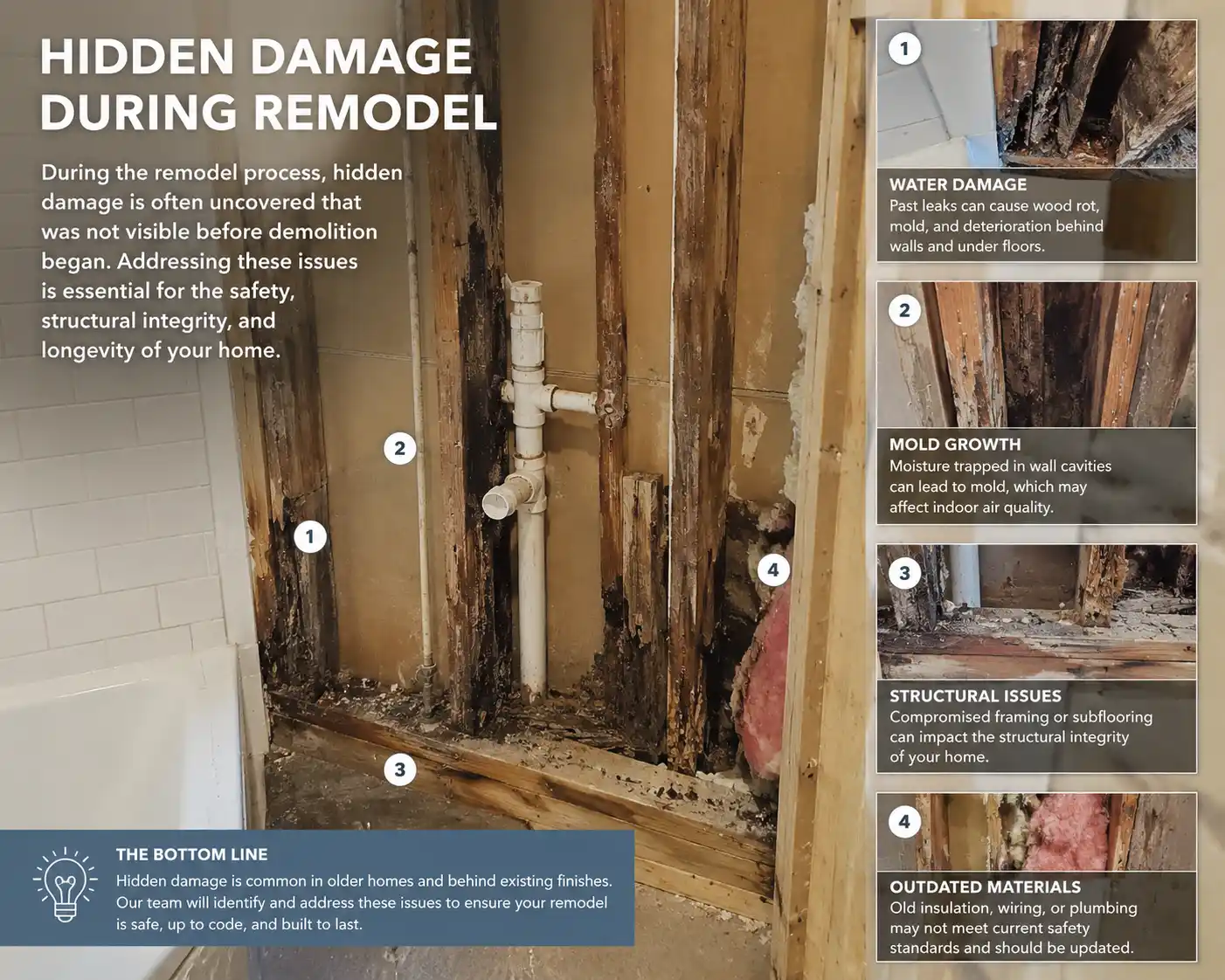
Major remodels frequently reveal conditions that were impossible to see beforehand. This is one reason homeowners should expect some uncertainty once demolition begins. A broader look at what happens when contractors discover hidden damage during remodeling explains why previously concealed problems can change the scope of an otherwise straightforward renovation.
Check Around Bathrooms and Kitchens Carefully
Kitchens and bathrooms deserve particular attention because they combine flooring with plumbing, fixtures, appliances, and frequent water exposure.
Around a toilet, for example, damaged subflooring may indicate a failed wax ring, plumbing issue, or long-term leak.
Around a bathtub or shower, deterioration may come from failed waterproofing, plumbing leaks, or years of water escaping outside the wet area.
In kitchens, dishwashers, sinks, refrigerators, and supply connections are common places to investigate.
Finding a problem does not mean the entire room needs a new subfloor. Often only the affected section requires repair.
But these areas should be examined before new flooring makes them inaccessible again.
Different Flooring Materials Have Different Requirements
Subfloor preparation should also reflect the flooring that will eventually be installed.
Hardwood typically requires a dry, secure, and sufficiently flat base.
Floating vinyl or laminate systems can tolerate some conditions differently but still have manufacturer limits for flatness and movement.
Tile usually requires greater stiffness and carefully prepared underlayment.
Glue-down products can expose imperfections that might be less noticeable under other finishes.
This is why the flooring manufacturer’s installation requirements matter. A subfloor that is acceptable for one product may not meet the requirements of another.
Do Not Use New Flooring to Hide an Old Problem
It can be tempting to keep a renovation moving by covering questionable areas, particularly when flooring installation is already scheduled.
That decision often saves very little.
The cost of repairing an exposed subfloor is usually far easier to manage than removing a recently installed finished floor later.
The ideal time to address squeaks, damaged sections, moisture problems, uneven areas, and questionable repairs is when the old flooring has already been removed.
Once the subfloor is covered again, the opportunity is gone.
A Better Flooring Project Starts Below the Surface
The most visible part of a flooring project may be the hardwood, tile, vinyl, or laminate that homeowners ultimately choose.
But much of the long-term performance of that floor depends on work nobody will ever see.
Taking time to inspect the subfloor, correct movement, identify moisture, repair deterioration, and prepare the surface properly can prevent many problems before they begin.
A beautiful finished floor should be the final layer of a sound assembly — not a decorative cover hiding unresolved damage underneath.