

The Investment That Multiplies Your Outdoor Living Time
A well-furnished outdoor space used from May through September and then abandoned from October through April represents 5 months of investment that returns value for only 5 months. The gap between the outdoor season and the calendar year can be narrowed significantly by addressing the two primary variables that drive people indoors prematurely: temperature and comfort.
Extending the outdoor living season by even 4–6 weeks — earlier in spring and later in fall — meaningfully improves the return on any outdoor furniture and hardscape investment. The tools that accomplish this are patio heaters, weather-resistant comfort furniture, and the layered textile approach that indoor spaces use for warmth.
Patio Heater Types: What Works in Different Configurations
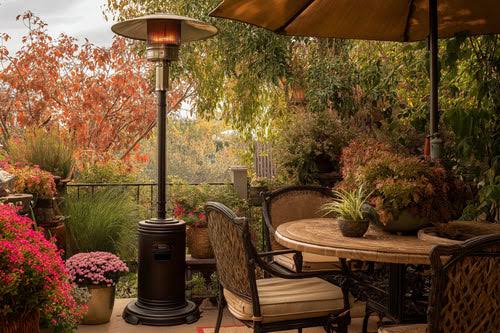
Propane freestanding heaters (the tall mushroom-shaped heaters common in restaurant patios) produce substantial heat output (30,000–40,000 BTU) at a range of up to 9 feet radius, making them appropriate for large open patios where a single heat source can warm a gathering area. They require propane tank access (20-pound tanks, typically 10–15 hours of operation per tank) and a flat, stable surface. Their limitation: the heat radiates primarily in a cylinder pattern and is significantly affected by wind.
Natural gas heaters on a permanent gas line eliminate the propane logistics but require a licensed gas contractor to install the connection and are permanently positioned once installed. Electric infrared heaters (both freestanding and wall-mounted) heat objects and people directly rather than warming air — they’re effective even in breezy conditions because they don’t rely on warm air staying in place. Wall-mounted electric infrared heaters over a seating area provide consistent, directable heat without consuming floor space.
Fire Features: Heat Plus Atmosphere
Fire pits and outdoor fireplaces serve the patio heater function while adding the social and atmospheric dimension that a mechanical heater doesn’t provide. A fire pit seating arrangement — comfortable chairs arranged around a central fire feature with a low coffee table — creates a gathering configuration that draws people together in a way that patio heaters augmenting standard furniture arrangement doesn’t.
Natural gas fire features (table-height fire pit tables, outdoor fireplaces built into structures) provide consistent, controllable flame without the wood management that traditional wood-burning fire pits require. The trade-off is the loss of the campfire sensory experience — crackling sound, wood smoke smell — that many people consider part of the outdoor fire’s appeal. Propane fire pit tables are the compromise: easy fuel, easy control, still a real flame.
Comfort Furniture for Extended-Season Use
The outdoor furniture that extends season use most effectively is furniture designed for genuine comfort rather than outdoor durability alone. A cast aluminum chair that’s weather-resistant but as comfortable as a metal park bench doesn’t invite lingering in cool weather — it invites sitting briefly and going inside. Deep-seating outdoor sofas and chairs with substantial cushions in weather-resistant performance fabric, sized and proportioned like indoor furniture, invite the extended sitting that makes outdoor spaces genuinely useful into the shoulder season.
Outdoor ottomans that can serve as footrests (creating the reclined posture that extends comfortable sitting duration) and side tables at appropriate heights for drinks without standing are the furniture details that distinguish an outdoor living room from outdoor seating.
Textiles for Outdoor Temperature Extension
The indoor layering approach for warmth translates directly to outdoor spaces: outdoor throws (acrylic or wool-blend fabrics in performance outdoor finishes that resist moisture and dry quickly) kept in a weatherproof basket near the seating area add warmth for the degree differential that makes the difference between staying outside and going in.
Outdoor cushions with removable covers (performance fabric that can be cleaned with a hose) transition between seasons by swapping covers — a lighter, more colorful set for summer and a richer, deeper palette for fall creates a seasonally relevant space without furniture replacement. Roll-down shade screens (motorized or manual) on pergola structures block wind while maintaining openness — wind chill is frequently the variable that drives people indoors before temperature alone would.